
Site Video Log (SVL)
Structured Video Documentation for Road, Civil and Infrastructure Projects
What is a SVL?
Definition
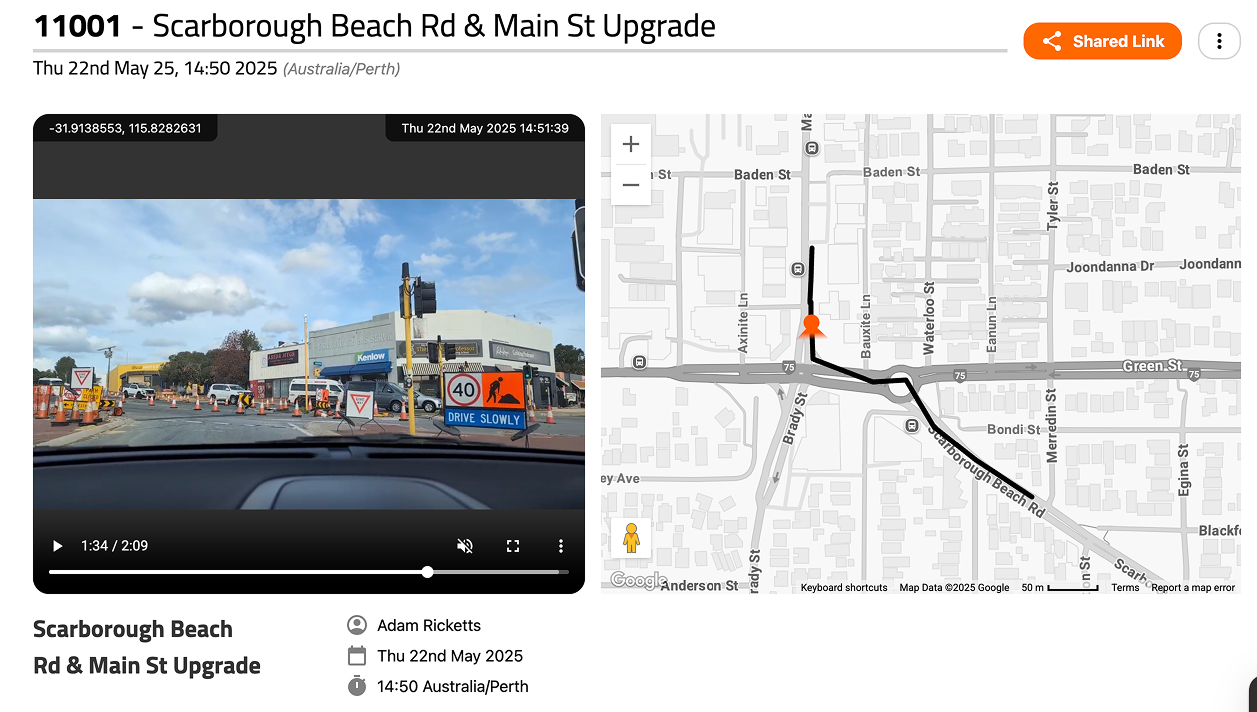
Site Video Log (SVL) is a structured method of capturing, verifying and storing video-based evidence of site conditions, activities and compliance throughout the lifecycle of a road, civil, or infrastructure project. Unlike traditional record-keeping methods such as written reports, photos, or checklists, a SVL provides continuous, timestamped and geolocated video documentation, offering an auditable record of on-site activities before, during and after work completion.
Purpose and Application
The purpose of a SVL is to provide a clear, factual and verifiable account of conditions and actions undertaken in the field. This supports:

Safety and Compliance Verification
Ensuring that regulatory and contractual obligations were met.

Accountability and Transparency
Reducing disputes over site conditions, incidents or quality of work.

Evidence Based Reviews
Allowing authorities, contractors, and asset owners to confirm adherence to TMPs, TGSs, EMPs and other site-specific safety requirements.
Key Principles of a SVL Record
01
Accuracy and Integrity
Video records must include time, date, and location data to ensure authenticity.
02
Accessibility and Retention
Records should be securely retained and retrievable for a period consistent with legal, contractual or risk management requirements (typically up to 7 years).
03
Usability
Video data should be easily reviewable, searchable and exportable to support compliance checks, audits and investigations.
04
Privacy and Governance
Video documentation should comply with applicable privacy, surveillance and workplace laws.
05
Integration with Digital Systems
Where possible, SVL records should integrate with job management, scheduling, project management, safety or traffic control and design systems to provide a unified record of activity.
Industry Benefit
By adopting a SVL standard, agencies and contractors can strengthen safety outcomes by ensuring every site setup is validated and verifiable. This proactive transparency reduces the likelihood of incidents, protects workers and the public, and helps maintain safer site environments.
In addition, consistent video documentation lowers legal and financial risk, improves auditability and promotes trust between contractors, clients and regulators through clear, evidence based accountability.
If you would like to find out more about adopting SiteStory to implement Site Video Logs into your workflow, we’d love to talk to you.